The most common finding in sanitary audits of hospital laundries is blunt: “inadequate documentation, incomplete records, misaligned practices”. It is not a process failure on the production floor — it is the absence of proof of what happened.
This article covers what Brazilian sanitary regulation ANVISA RDC 06/2012 requires, what CCIH and ONA expect on top of that, and what the system needs to store to answer in minutes, not days.
What RDC 06/2012 Requires
ANVISA’s Collegiate Board Resolution No. 06 of 2012 is the Brazilian regulation that governs the processing of healthcare textiles. The items below become auditable records:
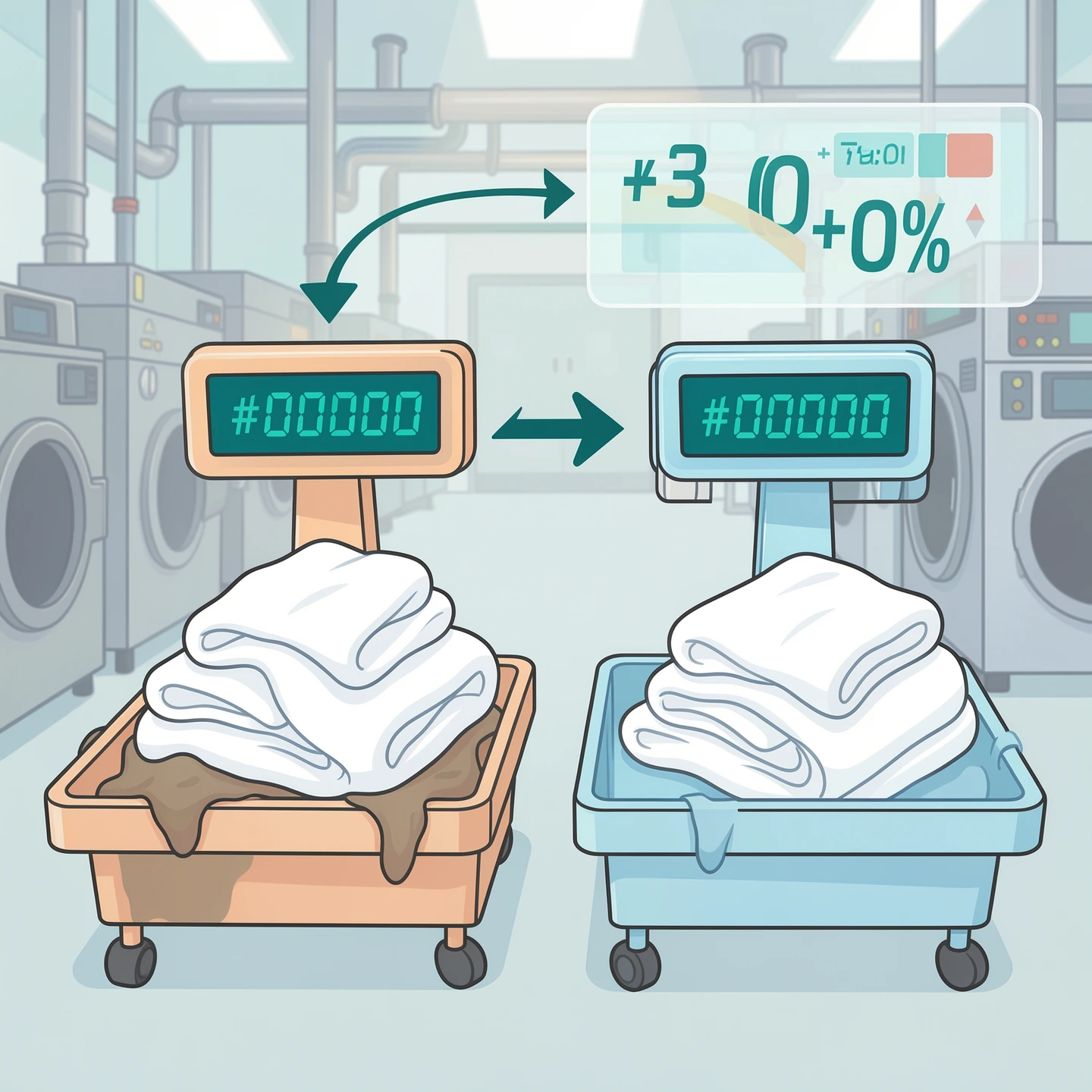
- Weight tolerance of ±30% between gross weight (dirty area) and clean weight (clean area)
- Wash cycle records: program, temperature, time, machine
- Segregation by contract: client A does not share a wash load with client B
- Documentation of non-conformities: rewash, lost items, cross-contamination
- Equipment maintenance and calibration history (scales, machines)
Each item above becomes a digital record once the system is in place. Without a system, the spreadsheet does not trace it — the auditor asks, and rebuilding the record takes 40 hours, with the risk of gaps.
What CCIH Asks For
The client hospital’s Hospital Infection Control Commission (CCIH) looks at this through a different lens. It asks for:
- Incident history with contaminated items (blood, secretions, sharps)
- Response time on rewashes by root cause (contamination not removed on the first wash)
- Documentation of proper disposal of non-recoverable materials
- Traceability per load when there is a suspected HAI (healthcare-associated infection)
Without data tied to collection + load + client, CCIH asks and no one delivers.
What ONA and Joint Commission Ask For
For accredited hospitals (ONA Level 3 — Brazil’s hospital accreditation body — and Joint Commission), the laundry audit is part of accreditation renewal. They ask for:
- Operational indicators per contract (volume processed, average soil level, rewash rate)
- Training documentation for the operational team
- Standard operating procedures (SOPs) tied to the system
- Critical analysis meetings with recorded decisions and actions
Accredited hospitals do not renew contracts with laundries that fail to deliver this data.
What the System Needs to Store
1. Record per Collection
Every collection generates an event with date, time, gross weight, operator, client, and active contract. Immutable.
2. Record per Cycle
Every wash cycle records machine, program, temperature, time, and the linked load.
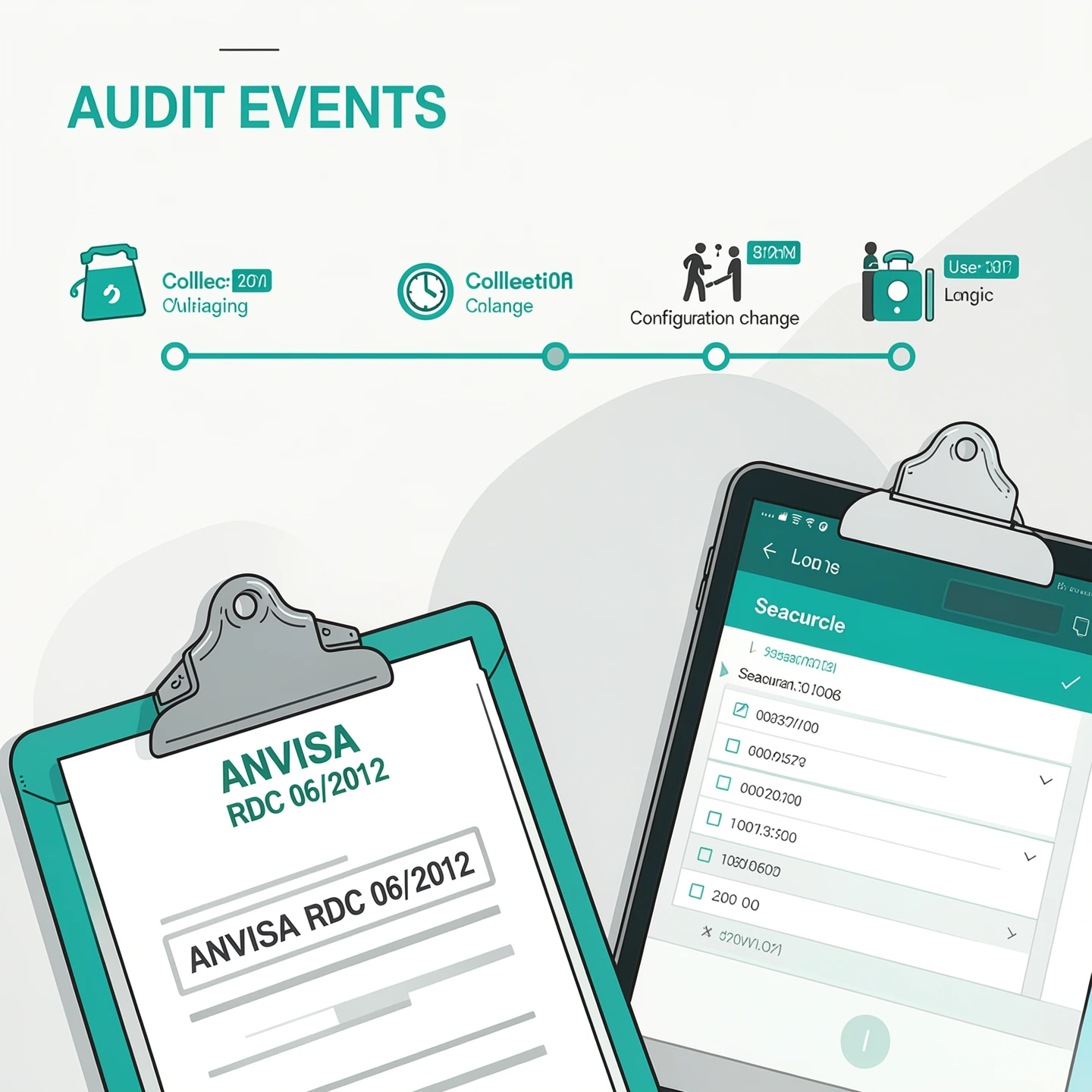
3. Configuration Audit Trail
Changes to parameters (contracted soil level, price per item, tolerance) are recorded with date, user, and previous value. No more “someone changed it and nobody knows who”.
4. Rewash History by Root Cause
When an item goes back for reprocessing, the cause is classified (soil not removed, stain, physical damage). This enables recurrence analysis by machine, program, or client.
5. Export in the Auditor’s Format
PDF for report attachments, XLSX for tabular analysis, search by period, client, or contract.
How Cleanifly Responds
Cleanifly has a configuration audit trail built in as an architectural module — not as an optional log. Every write to a configuration generates an immutable event retrievable by search.
- ANVISA tolerance is validated automatically per collection. When the clean weight is outside the range, the system flags it before invoicing. No more catching the error during invoice review.
- Audit trail: every change to soil level per contract, price per item, or operational parameter is retrievable. When the auditor asks about a change from six months ago, the answer is a search.
- Rewash classified by root cause: cause, machine, program, client. Enables recurrence analysis.
- Direct export in PDF and XLSX for audit attachments.
See the Security and Compliance page for technical details.
How Long an Audit Takes
Without a system: 40 hours. The entire team pulled off the operation. Risk of gaps in documentation.
With Cleanifly in production: 5 minutes per standard sanitary audit report. Retrievable history by search, exportable in PDF or XLSX directly.
The difference is not theoretical — it is what happens in a 350+ ton/month operation that uses the system today.
Next Step
If your laundry’s next ANVISA inspection is 30 to 90 days away and your history still lives in a spreadsheet and a notebook, schedule a 30-minute conversation. We will show you exactly which report comes out of the system, using the contracts you serve.